
5 Effective BIM Execution Plan Methods
Introduction
Building Information Modeling (BIM) has become a critical part of modern construction and design projects. From architects and engineers to contractors and facility managers, BIM helps project teams collaborate more effectively and make informed decisions throughout the project lifecycle. However, BIM success does not happen automatically. It requires a clear strategy, defined workflows, and strong communication among all stakeholders. This is where a BIM Execution Plan (BEP) becomes essential.
A BIM Execution Plan serves as a roadmap that outlines how BIM processes, standards, responsibilities, and deliverables will be managed during a project. Organizations that follow the 5 Effective BIM Execution Plan Methods can improve project coordination, reduce errors, and enhance overall project efficiency.
This guide explores the 5 Effective BIM Execution Plan Methods that help construction professionals create a successful BIM framework and achieve better project outcomes.

What Is a BIM Execution Plan?
A BIM Execution Plan (BEP) is a document that defines the processes, standards, roles, and responsibilities required to implement BIM on a project. It ensures that all project participants understand how information will be created, shared, and managed.
The purpose of a BEP is to align project stakeholders around common objectives and establish a structured approach to BIM implementation. By applying the 5 Effective BIM Execution Plan Methods, project teams can improve collaboration and maintain consistency throughout the project.
Why a BIM Execution Plan Is Important
Without a proper execution plan, BIM projects can suffer from communication gaps, inconsistent modeling practices, and data management issues.
Key Benefits of a BIM Execution Plan
- Improved collaboration among stakeholders
- Reduced design conflicts
- Better project coordination
- Enhanced data management
- Increased project efficiency
- Improved construction quality
- Reduced project risks
The 5 Effective BIM Execution Plan Methods help organizations maximize these benefits while ensuring that BIM objectives are achieved successfully.
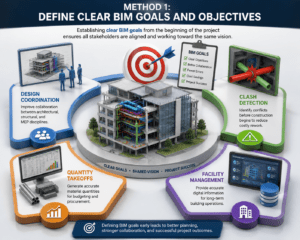
Method 1: Define Clear BIM Goals and Objectives
One of the most important 5 Effective BIM Execution Plan Methods is establishing clear BIM goals from the beginning of the project.
Project teams should identify exactly how BIM will be used and what outcomes are expected. Defining objectives early helps ensure that all stakeholders are working toward the same vision.
Common BIM Goals
Design Coordination
Improve collaboration between architectural, structural, and MEP disciplines.
Clash Detection
Identify conflicts before construction begins to reduce costly rework.
Quantity Takeoffs
Generate accurate material quantities for budgeting and procurement.
Facility Management
Provide accurate digital information for long-term building operations.
By defining BIM goals early, teams can develop a focused execution strategy that supports project success.
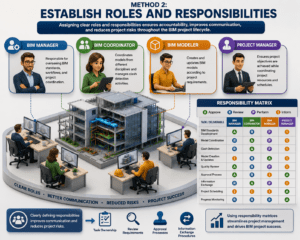
Method 2: Establish Roles and Responsibilities
Another key component of the 5 Effective BIM Execution Plan Methods is assigning clear roles and responsibilities.
Every stakeholder involved in BIM implementation should understand their duties and expectations. This prevents confusion and improves accountability throughout the project lifecycle.
Essential BIM Roles
BIM Manager
Responsible for overseeing BIM standards, workflows, and project coordination.
BIM Coordinator
Coordinates models from different disciplines and manages clash detection activities.
BIM Modeler
Creates and updates BIM models according to project requirements.
Project Manager
Ensures project objectives are achieved while coordinating project resources and schedules.
Clearly defining responsibilities improves communication and reduces project risks.
Responsibility Matrix
A responsibility matrix can help identify:
- Task ownership
- Review requirements
- Approval processes
- Information exchange procedures
Organizations that follow the 5 Effective BIM Execution Plan Methods often use responsibility matrices to streamline project management.
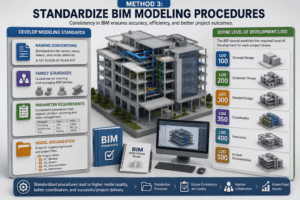
Method 3: Standardize BIM Modeling Procedures
Consistency is critical in BIM projects. One of the 5 Effective BIM Execution Plan Methods focuses on creating standardized modeling procedures and documentation requirements.
Without standards, project teams may use different naming conventions, file structures, and modeling techniques, leading to confusion and inefficiencies.
Develop Modeling Standards
A BIM Execution Plan should define:
Naming Conventions
Standardized file names, views, sheets, and model elements.
Family Standards
Guidelines for creating and managing BIM families.
Parameter Requirements
Consistent parameters that support project reporting and data management.
Model Organization
Rules for organizing models and project files.
These standards improve model quality and make project information easier to manage.
Define Level of Development (LOD)
The BEP should establish the required Level of Development for each project phase.
Common LOD levels include:
- LOD 100 – Concept Design
- LOD 200 – Schematic Design
- LOD 300 – Detailed Design
- LOD 350 – Coordination
- LOD 400 – Fabrication
- LOD 500 – As-Built Documentation
Implementing standardized procedures is one of the most effective ways to apply the 5 Effective BIM Execution Plan Methods.
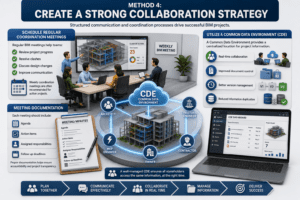
Method 4: Create a Strong Collaboration Strategy
Successful BIM projects rely on collaboration. Another one of the 5 Effective BIM Execution Plan Methods involves creating structured communication and coordination processes.
Schedule Regular Coordination Meetings
Regular BIM meetings help teams:
- Review project progress
- Resolve clashes
- Discuss design changes
- Improve communication
Weekly coordination meetings are often recommended for active projects.
Meeting Documentation
Each meeting should include:
- Agenda
- Action items
- Assigned responsibilities
- Follow-up deadlines
Proper documentation helps ensure accountability and project transparency.
Utilize a Common Data Environment (CDE)
A Common Data Environment provides a centralized location for project information.
Benefits include:
- Real-time collaboration
- Improved document control
- Better version management
- Reduced information duplication
A well-managed CDE supports several of the 5 Effective BIM Execution Plan Methods by ensuring all stakeholders access the same information.
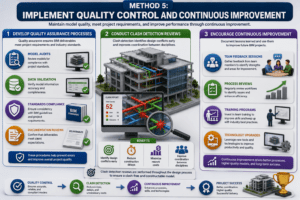
Method 5: Implement Quality Control and Continuous Improvement
The final strategy among the 5 Effective BIM Execution Plan Methods focuses on maintaining model quality and improving project performance.
Quality control procedures help ensure that BIM deliverables meet project requirements and industry standards.
Develop Quality Assurance Processes
Quality assurance should include:
Model Audits
Review models for compliance with project standards.
Data Validation
Verify model information accuracy and completeness.
Standards Compliance
Ensure consistency with BIM guidelines and project requirements.
Documentation Reviews
Confirm that deliverables meet client expectations.
These procedures help prevent errors and improve overall project quality.
Conduct Clash Detection Reviews
Clash detection is one of the most valuable BIM processes.
Benefits include:
- Identifying design conflicts early
- Reducing construction delays
- Minimizing rework costs
- Improving coordination between disciplines
Organizations that adopt the 5 Effective BIM Execution Plan Methods typically perform clash detection reviews throughout the design process.
Encourage Continuous Improvement
Project teams should document lessons learned and use them to improve future BIM projects.
Continuous improvement strategies may include:
- Team feedback sessions
- Process reviews
- Training programs
- Technology upgrades
By continuously refining BIM workflows, organizations can achieve long-term success.
Common Challenges in BIM Execution Planning
Even with a strong execution plan, project teams may face challenges.
Limited BIM Experience
Some team members may require additional training and support.
Inconsistent Standards
Different modeling practices can create coordination issues.
Poor Communication
Lack of communication can lead to misunderstandings and delays.
Resistance to Change
Some organizations may struggle to adopt new BIM workflows.
Applying the 5 Effective BIM Execution Plan Methods can help address these challenges and improve project performance.
Best Practices for BIM Execution Planning
To maximize BIM success, consider these recommendations:
Start Early
Develop the BIM Execution Plan during project initiation.
Involve All Stakeholders
Engage architects, engineers, contractors, and owners in the planning process.
Keep Documentation Updated
Review and revise the BEP as project requirements evolve.
Provide Training
Ensure team members understand BIM standards and workflows.
Monitor Performance
Track BIM objectives and identify opportunities for improvement.
Organizations that consistently follow the 5 Effective BIM Execution Plan Methods are more likely to achieve successful project outcomes.
Conclusion
A BIM Execution Plan is one of the most valuable tools for managing BIM projects effectively. It provides a structured framework for defining goals, assigning responsibilities, standardizing workflows, improving collaboration, and maintaining quality.
The 5 Effective BIM Execution Plan Methods discussed in this article provide practical guidance for creating a successful BIM strategy. By implementing the 5 Effective BIM Execution Plan Methods, project teams can improve communication, reduce risks, enhance coordination, and deliver better project results.
As BIM adoption continues to grow across the construction industry, understanding and applying the 5 Effective BIM Execution Plan Methods will remain essential for organizations seeking to improve efficiency, maximize project value, and achieve long-term success.
For more information click here.